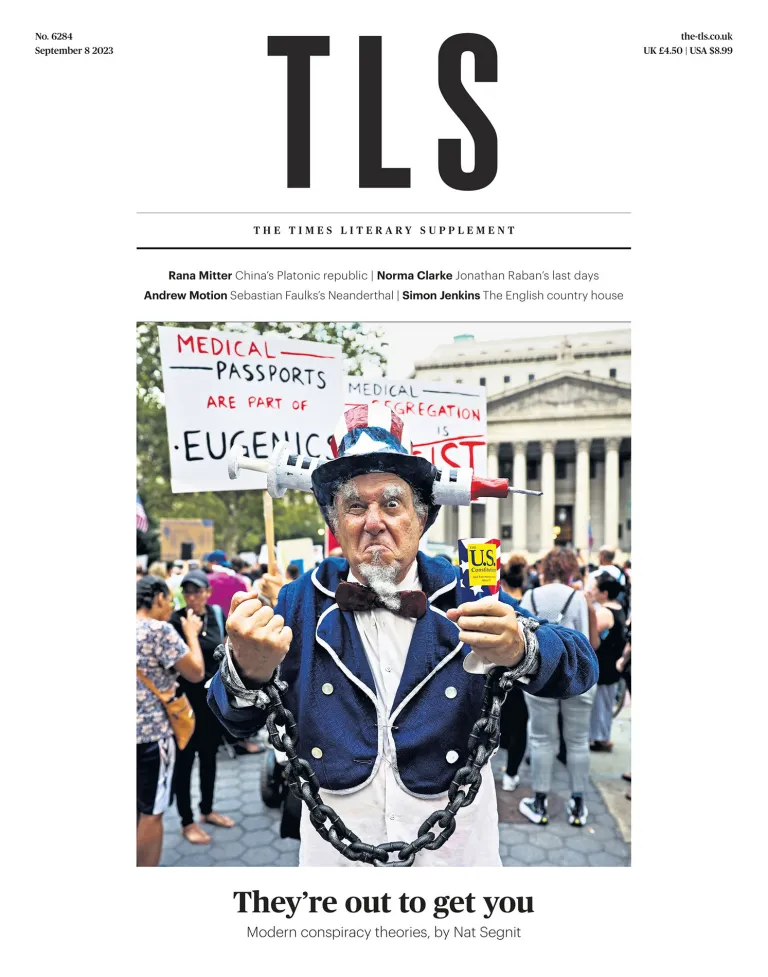
In the latest Times Literary Supplement, Harold reviews a biography of the late writer Larry McMurtry by Tracy Daugherty.
“That McMurtry would create an epic saga of the Old West seems both preordained and paradoxical. Born into a West Texas ranching family in 1936, he grew up, as he put it, in “prolonged and intimate contact with first-generation American pioneers”, his own grandparents having arrived in the region when white settlers still had cause to worry about the occasional Comanche raid”
“True crime writer Schechter (Butcher’s Work) spotlights objects linked to acts of violence in this eccentric volume. According to Schechter, the practice of holding on to such keepsakes dates back to at least 1827, when an English hangman cut up a noose from a notorious killer and sold one-inch sections of it for a guinea each.
…It adds up to a strange and fascinating tour of the macabre.”
It is the rare reference book that is compulsively readable, but Murderabilia is one.
As the introduction explains, interest in violent death and the collecting of memorabilia surrounding the scenes of such deaths dates back hundreds of years. The 100 entries date from the murder of Naomi Wise in 1808 (commemorated in a “murdered-girl ballad”) to the Slender Man stabbing of 2014, the product of a too-deep adolescent identification with an internet meme. Each entry is illustrated with black-and-white photos or reproductions of artifacts. Giving background information on perpetrators, the historical milieu in which they operated, and, to the extent possible, their mental outlooks and physical conditions, these two-to-four-pages-long articles provide fertile ground for true-crime fans or students researching specific cases or types of crimes. With a reference to a website that gives a detailed bibliography, photo credits, and a comprehensive index, Murderabilia covers crimes ranging from those of passion to school shootings to bombings. A sound addition to true-crime collections and collections in colleges, especially those with concentrations in criminology or criminal justice.
“When a genre finally makes it into the hallowed halls of the Library of America, that is a sign of its growing respectability. (Psychological suspense did with my own two-volume set, Women Crime Writers, in 2015.) As a writer, Schechter has done more work and research on historical serial murderers than anyone else (and become, alas, ripe for pilfering by true crime podcasters.) Editing this volume demonstrates the breadth of his knowledge and his astute choices of other nonfiction crime writers and their pet cases. Someday, I hope, there will be a follow-up anthology.”
“Neither the Columbine High School shooting in April 1999, in Colorado, nor the Sandy Hook Elementary School shooting in December 2012, in Connecticut, can properly be called the deadliest school massacre in U.S. history. Nor can any other similar atrocity in recent memory. That dismal distinction, as Harold Schechter notes in “Maniac,” a concise, harrowing work of social history, goes to the May 1927 disaster in Bath, Mich., in which 45 people (38 of them children) were killed in the dynamiting of a school building and the detonation of a car bomb.
Mr. Schechter, a veteran chronicler of notorious crimes and criminals, introduces us to the villain behind these horrific deeds: Andrew P. Kehoe, a sadistic farmer and school-board member with a list of perceived grievances as long as his adult life. His main complaints came to center on Emory Huyck, superintendent of the Bath Consolidated School, a new edifice designed to meet the latest standards in education. Huyck, an ex-military man possessing “absolute self-assurance and comfort with exercising authority,” as Mr. Schechter puts it, proved anathema to Kehoe.”
“…Schechter has managed to do a wonderful job researching the subject, drawing from newspaper reports, books and public records, and he synthesizes them beautifully, creating a tight narrative that’s hard to put down. Schechter’s writing is matter-of-fact and unshowy; while he includes the gruesome details of the bombing’s aftermath, he does so with sensitivity — the book is never lurid or exploitative. And while the picture he paints of Kehoe is evocative, he’s careful not to speculate about aspects of Kehoe that we don’t, and can’t know.”
A comics legend and a true crime expert join forces to shed light on an infamous killer.
It’s safe to say the world has become fascinated by the sad, twisted saga of Ed Gein, one of the most notorious serial murderers in American history. Gein’s crimes shocked and mesmerized many in the 1950’s, and Gein himself has served as inspiration for many twisted killers in the movies, from Psycho‘s Norman Bates to The Texas Chainsaw Massacre‘s Leatherface. With their upcoming graphic novel Did You Hear What Eddie Gein Done?, creators Eric Powell and Harold Schechter aim to cut through the myths and reveal the true history of a true American villain.
“The author displays a talent for mixing lurid pulp narrative, dead-on procedural facts, and tabloid rag copy. Despite a full confession from Irwin, his defense attorney Samuel Leibowitz, “The Great Defender” with a notable record and clients such as Al Capone and the Scottsboro Boys, twisted the jury around his finger and walked away with a draw. Ambitious, bold, and evocative, Schechter’s storytelling grabs the reader in a similar manner to Capote’s searing In Cold Blood.”